
7 THINGS YOU DIDN'T KNOW ABOUT GREENWICH VILLAGE
Crooked streets, mafia-run gay bars, and some very questionable neighborhood legends. Welcome to the Village.
New York City likes a good system. Reliable, 24/7 mass transit. A pristine, gravity-powered fresh water supply. And a street grid so predictable that even the most directionally challenged tourist can eventually figure out which way is uptown.
But then there's Greenwich Village.
Here, the streets bend and occasionally seem to have personal disagreements with one another. Houses occupy spaces where houses have no business being houses. Neighborhood legends get repeated so often that eventually nobody remembers who made them up. And beneath one of the city's most beloved public parks, thousands of New Yorkers have been resting considerably longer than the people enjoying their lunch above them.
The Village has been home to immigrants, artists, radicals, musicians, and generations of people who didn't fit neatly into the rest of society. Naturally, it developed a reputation for doing things differently.
But some of its best stories are even stranger than its reputation suggests.

1. Nobody Puts the Village in a Corner
There's a reason Greenwich Village feels different from the rest of Manhattan. And it isn't just the expensive real estate.
Much of the neighborhood developed before the Commissioners' Plan of 1811 established the orderly street grid that defines most of Manhattan today. The Village grew around older roads, property lines, and the natural landscape. Rather than erase everything and start again, parts of that earlier geography survived.
The result is a neighborhood where West 4th Street can intersect West 10th Street, and a perfectly reasonable attempt to walk in a straight line can become an unexpected sightseeing tour. For visitors accustomed to Midtown's tidy geometry, navigating the Village can feel like somebody shuffled the street signs after a few drinks.
And nowhere is the neighborhood's stubborn streak more literally set in stone than at the intersection of Christopher Street and Seventh Avenue South.
Just outside Mamali NYC sits the blink-and-you'll-miss-it Hess Triangle, a tiny mosaic embedded in the sidewalk. It's all that remains of the property once occupied by the Voorhis, a five-story apartment building owned by landlord David Hess.
When the city extended Seventh Avenue southward in the early twentieth century, the building was demolished to make way for the new thoroughfare. But a surveying oversight left one minuscule triangular piece of land in the Hess family's possession.
The city wanted the remaining land dedicated to public use. The Hess heirs had other ideas.
In 1922, they installed a mosaic announcing, in no uncertain terms:
PROPERTY OF THE HESS ESTATE WHICH HAS NEVER BEEN DEDICATED FOR PUBLIC PURPOSES.
More than a century later, the message remains embedded in the sidewalk.
New York City got its avenue. The Hess family got the last word.

2. New York's Skinniest House Has a Suspicious Backstory
At 75½ Bedford Street, squeezed between two considerably more conventional buildings, stands one of Greenwich Village's most improbable residences.
The house measures roughly nine and a half feet across on the outside, and less than nine feet on the inside. That's barely enough room for Knicks superstar Karl-Anthony Towns to lie down across it without feeling cramped. Although, in fairness, the city's real estate market has never considered human comfort a particularly important measurement.
The building occupies a sliver of land that once served as a passageway between neighboring properties. Its unusual footprint explains why it looks as though someone accidentally constructed a house in the space reserved for an alley.
But that explanation isn't nearly dramatic enough for Greenwich Village.
According to a story often told on neighborhood walking tours, two neighboring property owners became embroiled in a bitter dispute over the narrow passageway, with both laying claim to the land. As the story goes, one owner left town for a while, only to return and discover that the other had constructed an entire house on the contested property.
A “spite house,” if you will. Architecture as a form of revenge.
It's a wonderfully New York story. There's just one problem: the available historical accounts establish the building's unusual origins, but they don't establish that deliciously petty sequence of events.
And that may be the most Greenwich Village thing about it. In a neighborhood overflowing with great storytellers, a fun anecdote can acquire the authority of history simply by being repeated often enough.
The house doesn't need an invented feud to be fascinating, either. Poet Edna St. Vincent Millay lived there in 1923 and 1924, while actors Cary Grant and John Barrymore are also said to have called the address home, adding a genuine celebrity pedigree to an already extraordinary residence.
So is it a spite house?
Perhaps not. But it certainly looks like a building with something to prove.
3. Before Stonewall Became a Monument, It Was Run by the Mob
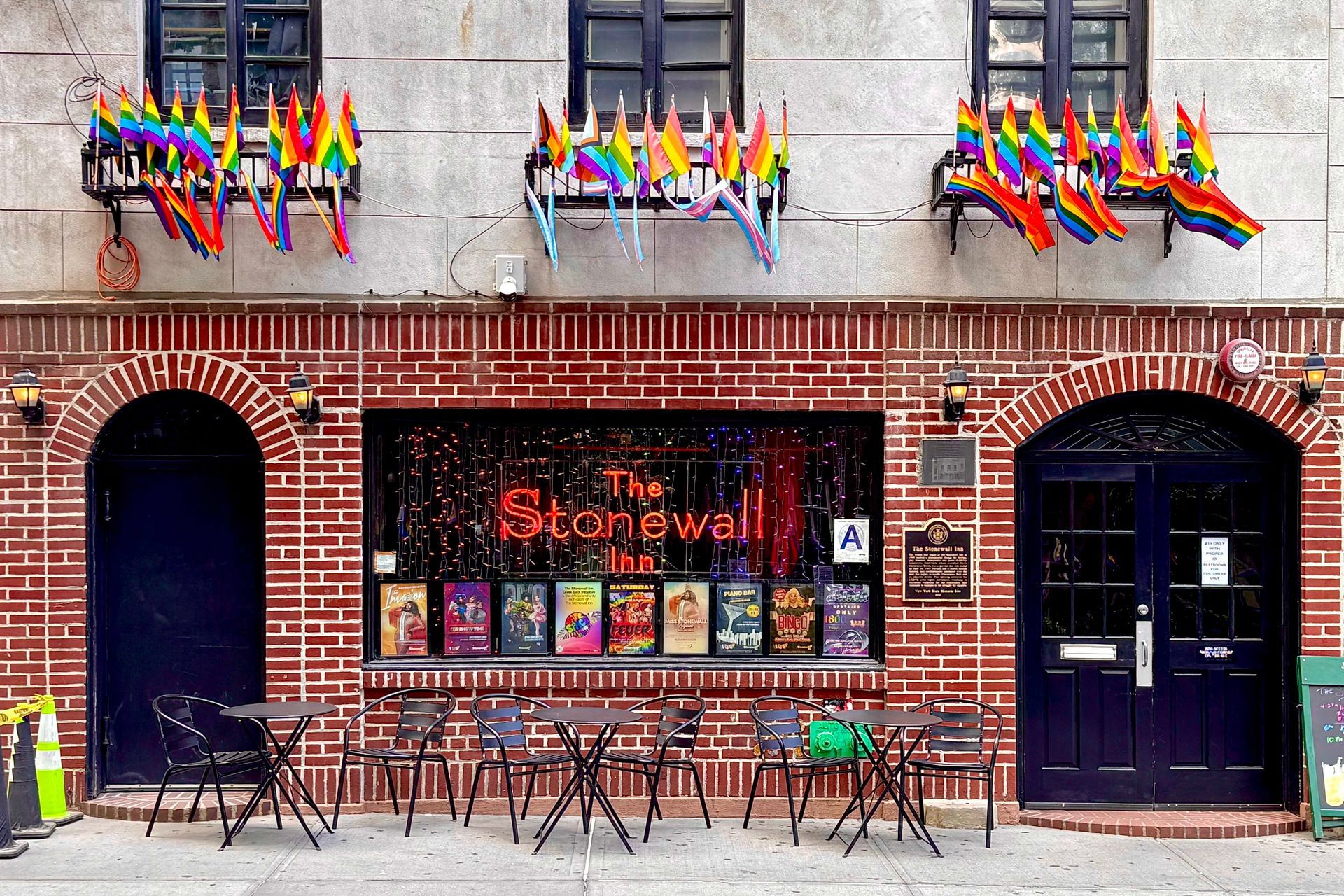
Today, the Stonewall Inn is internationally recognized as a landmark in the ongoing struggle for LGBTQ+ rights. In the 1960s, it was also operated by organized crime.
Welcome to New York.
At a time when gay New Yorkers faced widespread discrimination and police harassment, openly welcoming establishments were relatively scarce. For years, New York's liquor authorities had targeted bars serving gay patrons, while police could use vague accusations of disorderly conduct to justify arrests. Even after activists successfully challenged some of these practices, obtaining a liquor license for an openly gay bar remained difficult.
So, of course, organized crime recognized an opportunity.
The Mafia could operate establishments catering to gay patrons and profit from a market that conventional businesses often refused to serve. By paying off corrupt police officers, bar operators could sometimes receive advance warning of raids or avoid them altogether.
It was hardly an ideal arrangement.
The Stonewall Inn was notorious for poor conditions, and its operators were motivated by profit, not an enlightened commitment to civil liberties. Despite the payoffs, police raids remained a very real threat to patrons, who risked arrest, humiliation, and public exposure.
Yet the establishment still provided something important: a place where LGBTQ+ New Yorkers could gather, socialize, dance, and find community in a city that frequently treated their very existence as a problem.
There is a particularly bitter irony in that arrangement. People excluded or harassed by official institutions sometimes found places to gather in establishments operated by people breaking the law. And the same authorities supposedly responsible for protecting the public could be among those making their lives miserable.
When police raided Stonewall in the early hours of June 28, 1969, patrons and other members of the community fought back. The ensuing uprising became a defining event in the modern LGBTQ+ rights movement, building on years of activism that had already challenged discrimination across the country.
One year later, thousands marched through New York for Christopher Street Liberation Day, commemorating the uprising and helping establish the annual Pride traditions now celebrated around the world.
The heroes of Stonewall weren't the mobsters collecting the money. They were the people who refused to accept the world as it had been arranged for them. Like generations of Village residents before them, they challenged the rules of a city that had spent far too long telling them where it thought they belonged.
History rarely arrives wearing a clean shirt.

4. America's First Cappuccino Was Served in Greenwich Village
New York City has a habit of getting there first. America's first pizzeria? The famous claim belongs to Lombardi's on Spring Street. And when it comes to introducing Americans to the cappuccino, Greenwich Village has a first of its own.
Tucked onto quaint MacDougal Street, Caffè Reggio has been serving coffee, conversation, and a generous helping of New York history since 1927.
Founded by Italian immigrant Domenico Parisi, the café proudly bills itself as the first establishment in America to serve a cappuccino. Long before Americans were ordering venti caramel macchiatos with three pumps of vanilla and oat milk, Parisi was introducing New Yorkers to the Italian combination of espresso, steamed milk, and foam.
And he had quite the machine to do it.
Still displayed inside the café is an extraordinary espresso machine manufactured in 1902, an ornate contraption of chrome and bronze that looks like somebody borrowed the engine from a steam locomotive to make a cappuccino.
But the coffee is only part of Reggio's appeal. The café's interior is something of a time capsule, filled with antique furnishings, old-world artwork, and the sort of atmosphere that practically demands you sit down and write your first novel.
Over the decades, Caffè Reggio became part of the Village's legendary artistic and intellectual scene, attracting writers, musicians, actors, and generations of New Yorkers who understood that a coffeehouse could be considerably more than a place to buy coffee.
Hollywood eventually took notice, too. The café has appeared on screen in films including Shaft, The Godfather Part II, and the Coen brothers' Inside Llewyn Davis, in which Oscar Isaac's struggling folk musician navigates the neighborhood's early-1960s music scene.
Nearly a century after opening, Caffè Reggio remains a delicious reminder that some of New York's greatest contributions to American culture arrived with immigrants, a little ingenuity, and a very good cup of coffee.
5. Washington Square Park Used to Be a Cemetery
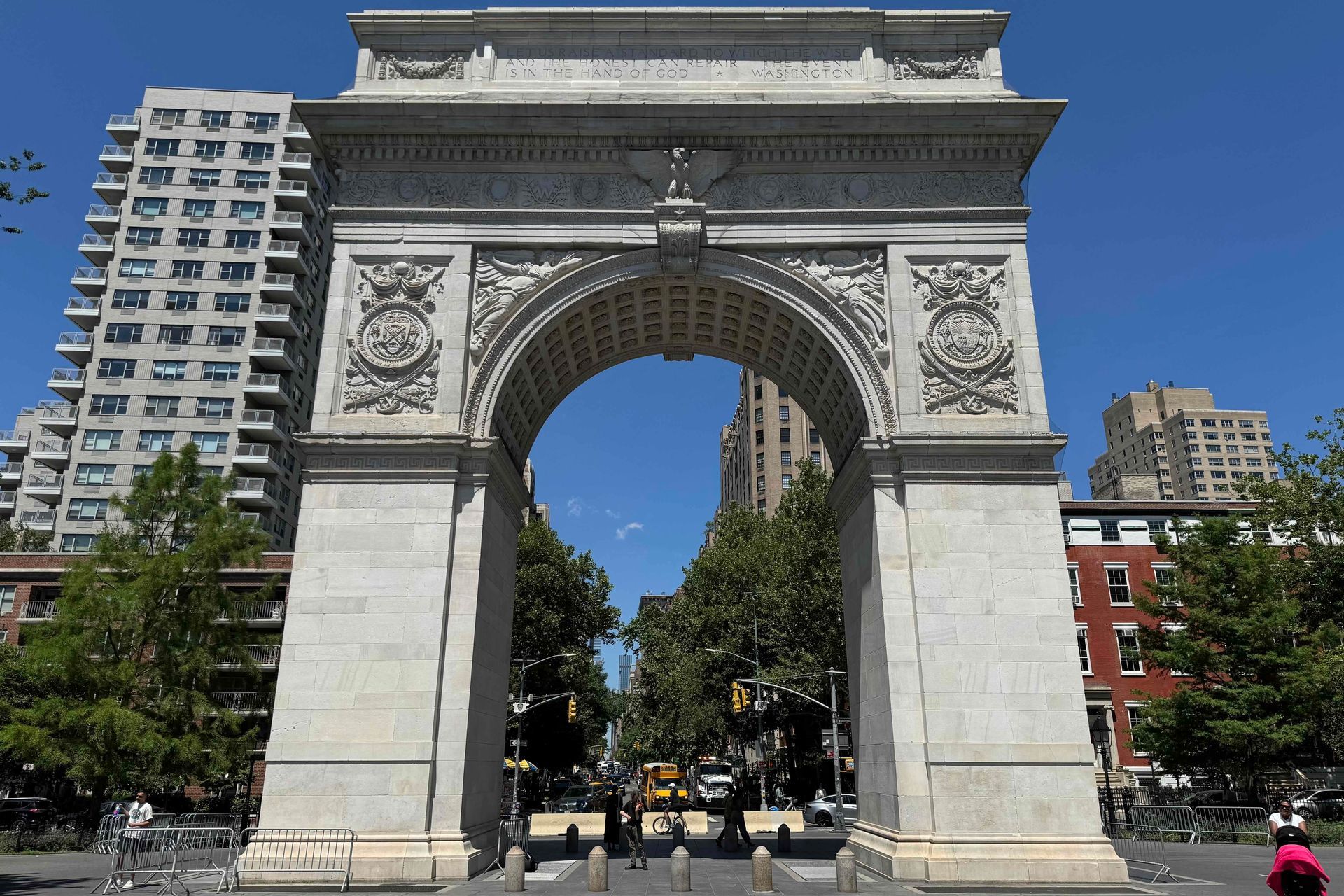
On a sunny afternoon, Washington Square Park is one of Manhattan's great public gathering places. NYU students sprawl across the grass. Musicians perform near the fountain. A man covered in pigeons will happily take selfies with you for a crisp $20 bill.
And beneath their feet?
Human remains.
Before Washington Square became a popular public park, the land served as a burial ground. From 1797 until 1826, the area was used as a potter's field, where New Yorkers who couldn't afford private burials, along with victims of the city's deadly epidemics, were laid to rest. Historians estimate that as many as 20,000 people were buried in what was then a relatively remote part of Manhattan, far removed from the crowded streets downtown.
But as the city expanded northward, the once-distant burial ground found itself surrounded by an increasingly desirable neighborhood. In 1826, the cemetery was closed and the land was transformed into a military parade ground, eventually becoming the public park we know today.
There was just one small detail.
The bodies stayed.
In fact, when city officials planned the transformation, they apparently saw little reason to disturb the thousands of people already buried there. The graves were simply covered over as the city found a new purpose for the land.
And every so often, New York gets a reminder of who's still downstairs.
In November 2015, construction workers replacing water mains along the eastern edge of the park uncovered two nineteenth-century burial vaults, complete with human remains and wooden coffins. Earlier excavations had revealed skeletons, bones, and even a gravestone dating to 1799.
It's a situation not entirely unlike the ill-fated housing development in the 1982 horror classic Poltergeist, except that Washington Square's history is considerably better documented. And, as far as we know, nobody's television has started communicating with the dead.
So the next time you're enjoying a sunny afternoon in Washington Square Park, remember: you're sharing the neighborhood with considerably more New Yorkers than you can see.
6. Even Playing Folk Music Was an Act of Rebellion
Washington Square Park hasn't just been a place to bury New Yorkers. It's also been a place for New Yorkers to argue. About politics. About public space. About who gets to use the neighborhood and what they're allowed to do once they get there.
And, on one particularly memorable occasion, about folk music.
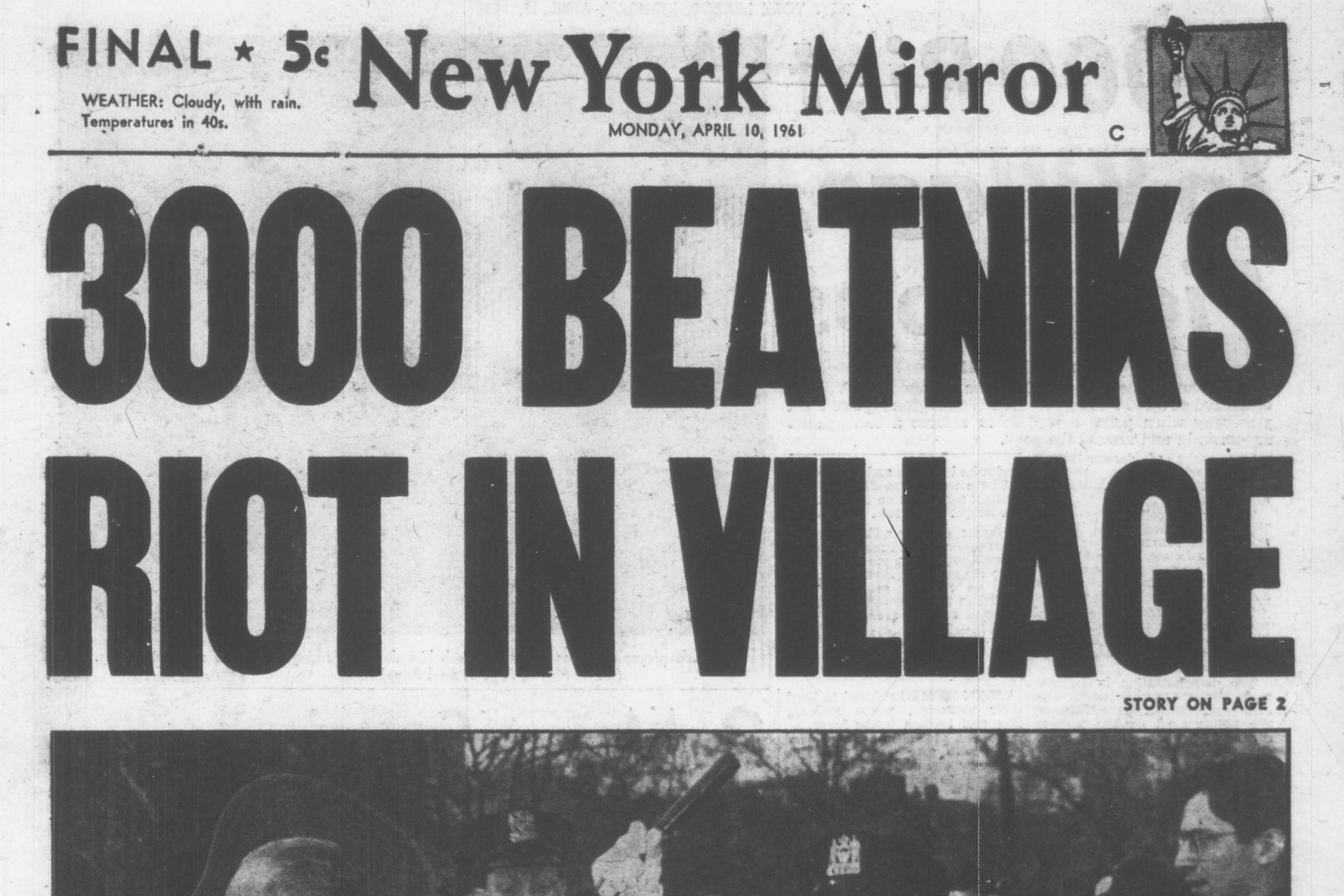
In April 1961, a dispute over permits for musicians who regularly gathered in Washington Square Park escalated into a protest and confrontations with police. The episode became known as the Washington Square Folk Riot. Imagine explaining that to somebody today: a neighborhood so committed to artistic freedom that people ended up protesting over the right to play folk songs in a park on a Sunday afternoon.
But the dispute reflected a much larger question. Who controls public space, and whose voices are welcome in it?
The Village had been confronting versions of that question for generations. Its history includes labor organizing, women's suffrage, artistic experimentation, and movements challenging social and political conventions. In 1911, the devastating Triangle Shirtwaist Factory fire, just east of Washington Square, killed 146 garment workers. The tragedy exposed deadly working conditions and helped galvanize a movement for stronger labor protections and workplace safety that are still enjoyed to this day.
Decades later, residents faced another battle over the future of Washington Square itself. In the early 1950s, powerful city planner Robert Moses backed a proposal for a four-lane roadway cutting straight through the park. But neighborhood activists, including Shirley Hayes, Edith Lyons, and Jane Jacobs, fought back, ultimately helping secure a Washington Square free of automobile traffic.
The battles differed enormously in their stakes, participants, and consequences. A fight over folk music wasn't the same as a struggle for workers' lives or civil rights. But together they reveal something enduring about the Village. For generations, people have treated this neighborhood not simply as a place to live, but as a place where they could challenge what New York was supposed to be.
Sometimes that meant confronting powerful institutions. Sometimes it meant refusing to let cars take over a public square.
And sometimes it meant picking up a guitar and making an extraordinary amount of trouble.
7. Greenwich Village, a Modern Pizza Mecca
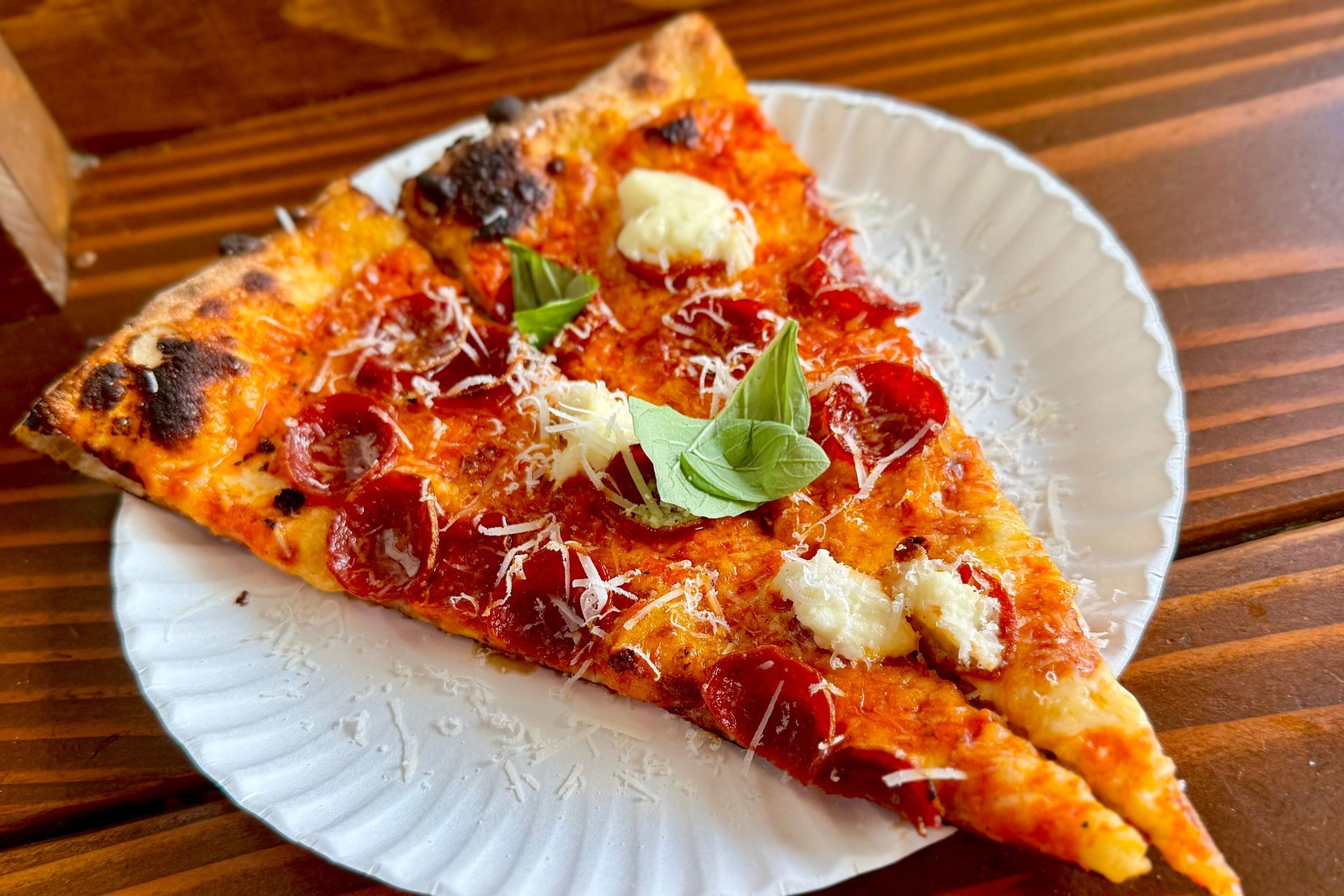
Ask somebody to imagine New York pizza, and there's a good chance they'll picture a giant triangular slice served on a paper plate, folded down the middle, and eaten while walking somewhere important.
It's one of the city's great culinary achievements: an entire meal engineered to be consumed without slowing down.
But New York pizza wasn't always synonymous with the slice. The city's earliest pizzerias favored whole pies baked in intensely hot coal-fired ovens. As gas ovens became more common, the business of baking, reheating, and selling individual slices helped create the portable New York institution we know today.
And Greenwich Village has long been one of the best places to experience both traditions.
At John's of Bleecker Street, the coal-fired, whole-pie approach has been drawing pizza lovers since 1929. Don't arrive expecting to order a single slice. Just a short walk away, Joe's Pizza has been serving the quintessential New York street slice since 1975, feeding generations of locals, tourists, and hungry New Yorkers who know that sometimes the simplest things are the hardest to perfect.
For decades, those two institutions alone would have been enough to make the Village a serious pizza destination.
But lately, the neighborhood has become something more: a full-blown pizza mecca.
A new generation of ambitious pizza makers has transformed the Village into a destination for people willing to cross boroughs, stand in long lines, and document their lunch for thousands of strangers on the internet.
L'Industrie and Mama's TOO! are among the most talked-about arrivals, bringing inventive toppings, carefully developed doughs, and a fresh approach to the New York slice. And they're hardly alone. Across the neighborhood, traditional slice shops now share the streets with restaurants experimenting with everything from fermentation techniques to unexpected flavor combinations.
Naturally, all that attention can come with a side order of waiting in line.
But the biggest names aren't necessarily the only ones worth discovering. At Slicehaus on Carmine Street, offerings like sausage and shishito peppers, vodka pepperoni, and porcini with truffle cream demonstrate just how far the humble New York slice can travel without losing its identity.
That's what makes the Village's pizza scene so exciting. The old-school institutions haven't disappeared. They've been joined by a new generation eager to prove that New York's most famous food still has plenty of room to evolve.
And for anyone interested in tasting that evolution firsthand, Slicehaus is one of seven stops on Tasteblazers' Greenwich Village Pizza Tour, which pairs classic slices, inventive creations, and unexpected tastings with the stories behind the neighborhood.
Because the best way to understand New York pizza isn't to choose between old-school and new-school.
It's to arrive hungry enough for both.
A Neighborhood That Refuses to Behave
Greenwich Village has spent centuries acquiring stories. Some are meticulously documented. Others have been polished by generations of artists, residents, restaurant owners, and tour guides until separating fact from folklore becomes an adventure of its own.
The streets really do defy Manhattan's grid. The Stonewall Inn really was operated by organized crime. Washington Square really was a burial ground. And somewhere on Bedford Street, a remarkably skinny house still inspires a wonderfully petty story about its origins.
But what makes Greenwich Village special isn't simply its colorful past. It's the generations of New Yorkers who have challenged conventions, defended their community, and continually reinvented the neighborhood on their own terms.
And even today, the Village still feels like a place where the next unusual chapter could begin at any moment.
Preferably somewhere near a good slice of pizza.
Photo credits: Historical images courtesy of Wikimedia Commons, the Library of Congress, and the New York Public Library Digital Collections. Caffè Reggio photograph: fdpictures,
CC BY 2.0; exposure and contrast adjusted.